
2.19.2009
Sorry for the delay in posting. Been reworking some things behind the scenes, hoping to streamline and prettify the blog.
I couldn't not mention this fairly amazing lookin' book, which I have yet to read...
Tiki Mugs; Cult Artifacts of Polynesian Pop by Jay Strongman, forward by
Holden Westland of Tiki Farm
Join us at La Luz de Jesus for the much anticipated release and signing party for “Tiki Mugs; Cult Artifacts of Polynesian Pop.” Author Jay Strongman, Tiki Farm’s Holden Westland and many mug artists will be on hand to sign the book. Tiki Farm will be unveiling some new limited edition Tiki mugs and we'll be serving up scrumptious Mai – Tais.
Tiki style is more popular than ever, and there are more collectors than ever peering out from the torches and palm trees. Dive head first, shrunken or otherwise, into a Polynesian Pop world of incredible ceramics, from vintage mid-century modern designs, to the collector mugs of today. The book features all the major manufacturers – Tiki Farm, Munktiki, Porcelanas Pavón, Gecko’z South Sea Arts and more along with the top artists including Shag, Bosko, Crazy Al, Ocea Otica, Squid and Tiki Diablo. Written by Tiki historian and renowned DJ Jay Strongman, this resource highlights the history of the Tiki mug from its original heyday in the 1950’s to today. An essential purchase for specialists, the photos and descriptions of styles such as the Frankentiki and the Monkey Mugstack will provide brilliant inspiration for those new to collecting.
Tiki Farm is the world's largest manufacturer of Tiki mugs and has reinvigorated the mug scene both with their retail line and the revitalization of custom mugs for bars & restaurants across the globe which all but disappeared back in the 1970's. Holden Westland, Tiki Farm owner & founder is widely known in the Tiki community as 'the hardest working man in Tiki" and is credited by most as being the driving force behind the resurgent Tiki mug scene. Since their inception in 2000, Tiki Farm is fast approaching a total of 1,000 different, unique designs produced to-date and sales in excess of 1,000,000 mugs.
“Tiki Mugs; Cult Artifacts of Polynesian Pop” by Jay Strongman, forward by Holden Westland, published by Korero, www.korerobooks.com, hard cover, 176 pages, ISBN 9780955339813, $34.95
For So Cal folks, go to the following event...
Saturday, March 7, 2009 6 pm - 9 pm
La Luz de Jesus Gallery
4633 Hollywood Blvd
Los Angeles, CA 90027
323-666-7667 Fax: 323-663-0243
www.laluzdejesus.com

1.10.2009

The Ed Hardy Smart Car.
Discuss.
1.09.2009
Rockabilly Roundup: Wanda Jackson will be inducted into Rock and Roll Hall of Fame
0 comments Posted by Bettie Blogger at 5:31 PMTulsa World has the latest and greatest... get the details!
I was reading this over and struck by how comprehensive it was, compared to most of the other published obituaries. In case you haven't read it...
Press Release: Bettie Page Obituary - Issued by CMG Worldwide
Los Angeles, December 11, 2008 – Bettie Page, sweet-smiling legendary 1950s pin-up queen with the killer curves and coal-black bangs, died today of pneumonia at a Los Angeles area hospital. She was 85 years old. She suffered a heart attack one week ago and never regained consciousness. Her popularity as an underground, guilty pleasures phenomenon has continued to soar despite the fact that the reclusive Page disappeared almost a half century ago, leading many to believe that one of the most photographed individuals of the 20th century was already dead.
As the model who many have argued raised cheesecake to an art, Page combined exuberant, wide-eyed innocence with confident, sometimes aggressive sexuality. VANITY FAIR praised the playfully seductive Page as “our Uber-pin-up.” The NEW YORK TIMES has declared that today “her star shines more brightly than it did in her brief heyday from 1950 to 1957.” PLAYBOY immortalized Page as one of its inaugural centerfolds and recently named her “the model of the century, yet she remains one of its best kept secrets.” In a recent TVGuide.com poll, Bettie Page was voted the “ultimate sex goddess,” outscoring others such as Marilyn Monroe.
Born on April 22, 1923 in Nashville, Tennessee, Bettie (spelled “Betty” on her birth certificate) Mae Page was the second child of six born to Walter Roy Page and Edna Mae Pirtle. The family was poor, moved often, and as a child, Page frequently found it necessary to take charge of her siblings. On several occasions they were dispatched to an orphanage. Life was hard. They were raised in the Church. Page owed her extraordinary looks and high intelligence to her parents, but it was a mixed blessing. Her mother did not want her. Her father molested her.
Page and her two sisters grew up movie fans who enjoyed acting out memorable scenes from whatever “picture show” they had just been to see. “I’ve been a movie hound my whole life,” Page said. “That’s how I started learning to pose, when my little sisters asked me to mimic photos of movie stars we’d seen in the magazines and newspapers.” They would experiment with different hairdos and makeup styles. At an early age Page learned to sew at the local community center; it was a skill with a practical application years later when she designed and made her own costumes, lingerie and bikinis to wear while modeling. She was the salutatorian of her high school graduating class. She was also program director of the dramatics club, secretary-treasurer of the student council, co-editor of the school’s newspaper and yearbook, and voted “Most Likely to Succeed” by her classmates.
Her own mother’s jealousy cost Page a scholarship to Vanderbilt University. Instead she earned a 1944 Bachelor of Arts degree in education from Peabody College in Tennessee. It was an uncommon achievement for a woman at that time. She tried teaching school, but her heart-breaking good looks made it impossible for the kids in class to focus on anything else but their pretty teacher. “I couldn’t control my students,” she would say with an irresistible wink, “especially the boys!” Two decades later Page returned to Peabody to work on her master’s degree.
There wasn’t anyone anywhere quite like Bettie Page. She thought for herself. She chartered her own course. She was independent. Page was completely self made, bore no prejudice of any kind, and recognized no barrier to personal fulfillment. Always a free spirit, she moved from Tennessee to San Francisco, took her first of several secretarial jobs, but dreamed of movie stardom (her favorites were Bette Davis and Gregory Peck). Plus she hoped for a chance at modeling. In her first work before still cameras, Bettie Page was more than fully clothed; she wore fur coats.
Everywhere she went, whatever she did, people were distracted and dumbstruck by her looks -- the beguiling smile, the raven hair, the flawless figure. Finally in 1945 one of these people arranged for the acting hopeful to visit Hollywood, where, unfortunately, 20th Century-Fox mishandled her screen test. “They did my hair and makeup so that I looked like a caricature of Joan Crawford,” Page recalled in the Southern drawl she never lost, and which Hollywood frowned on. “It was awful. They ran the test for me; I hardly even recognized myself.” She fled the lot when a producer promised a lucrative movie career in exchange for sexual favors. “I didn’t like his looks,” Page said. “I wouldn’t have gone to bed with him anyway. He was a creeeeeeep. He drove off in his big car and scolded me, ‘You’ll be sorry.’ I wasn’t.”
Nor was she interested in the attentions of flamboyant filmmaker, aviator and inventor Howard Hughes, who pursued Page as well. Hughes phoned and had his staff phone her many times, summoning Page regularly on the pretext of wanting to photograph the delicious looking model. She declined every entreaty. “I never returned any of his calls,” said the celebrated pin-up, who surprisingly few could pin down. “I guess people will say I made a mistake. But sex is part of love, and you shouldn’t go around doing it unless you are in love. I certainly didn’t.”
More than once in recent years she did concede that failing to answer a telegram from studio boss Jack Warner about doing a second screen-test at Warner Bros. was the one mistake she most regretted in her life. But her first husband, Billy Neal, was returning home from war in the South Pacific, and Page was focused on trying to save a collapsing marriage.
Living in New York during 1947 after divorcing Neal, one day at the beach Page chanced to meet a police officer named Jerry Tibbs. He had a side interest in photography. It was Tibbs who recommended she should adopt the trademark black bangs. He also aided in compiling her first pin-up portfolio. Of course Page was from the South; Tibbs happened to be black. Page happened to be color blind.
With her tantalizing face and figure, she innocently and perhaps inevitably drifted into cheesecake modeling as a lark, where Page was prolific. Almost immediately she was the ubiquitous face and figure adorning such publications as WINK, EYEFUL, SIR!, HE, SHE, JEST, BARE, STARE, GAZE, VUE, TITTER, SUNBATHING, BEAUTY PARADE, CHICKS AND CHUCKLES and scores more. Her saucy pictures ripped from these magazines decorated offices, lockers, garages and all manner of rooms around the world as if they constituted a new Bettie Page brand of wallpaper. Her image was everywhere, and attracted international attention and notoriety.
In posing for such photos (some by acclaimed fashion photographer Bunny Yeager), many who were witnesses recall that Page seemed to command these sessions the way a movie director would. Without intending to (and without realizing it either), because of her ingenuity and dominant personality, Page was effectively the creative force controlling much of her own work.
“I was generally happy posing, and that seemed to shine through in the pictures,” Page explained. “Nobody knew this, but I used to imagine the camera was my boyfriend, and I was making love to him. I had fun teasing the guy with the camera until he was in sync with whatever mood I was in.”
At a time when Marilyn Monroe was studying at the Actors Studio in Manhattan, Page was doing the same at the renowned Herbert Berghof Studios only blocks away. “I wasn’t trying to be an actress at that time, but I wanted to see if I could really act or not.”
The answer was pretty much, no. Actor Robert Culp taught some of Page’s classes, and did a dramatic one-act play with her. The title was DARK LADY OF THE SONNETS. “She was in way over her head,” Culp remembered. “She was nice, but she was not an actress, and had she continued, her thick Southern accent would have been a problem for her.”
Berghof and his wife, Uta Hagen (both famous exponents of the Stanislavsky method of acting) were impressed by one scene, however, and asked Page what she was drawing upon from her own experience to create the sense of remorse and tragic reality which she was projecting so effectively on stage. Page told them, “I was thinking of all the wicked things I had done, and how God was going to punish me for all my sins.”
On television, the biggest thing Page did was a performance in a skit with the star of THE JACKIE GLEASON SHOW. She disliked him. “Oh, Jackie Gleason was a tyrant,” Page declared. “That man was inconsiderate of everyone around him, including Art Carney, Joyce Meadows, the director, I do mean everyone. I never saw such screaming and yelling. Some people think I’m crazy! You should have seen this cad in action…although he was sweet to me!”
The pin-up extraordinaire never exploited her incredible figure to work as a dancer or stripper in clubs, but she did appear in three burlesque films that suggested as much: STRIP-O-RAMA (1953), VARIETEASE (1954), and TEASERAMA (1955). “I was terrible,” Page laughed in recalling these low budget grind-house efforts. She also performed for the camera in countless 8 and 16mm so-called “film loops” exhibited in peep shows and sold through the mail. Running only minutes long, many of these were staged and issued by the brother-and-sister team of Irving and Paula Klaw of Movie Star News in New York.
It was for the Klaws that Page gained infamy posing in bondage. “It was all pretend,” Page explained. “According to my arrangement with the Klaws, you had to do an hour of bondage poses in order to get paid for the other modeling work.” Seeing such photos in recent years (now they seem almost tame), she would laugh and comment, “Oh, I look like a meanie here….But honestly, who could take any of this seriously? I never understood how anyone believed those poses were sexy. To be tied up? I don’t get it.”
Enough did, however, so that Bettie Page quickly became the most photographed woman in the world. There could be no doubt, she was a sensation. THE PAGE CRAZE WAS ON.
“You couldn’t walk by a newsstand without seeing a picture of this gal on one magazine or another,” said Hillard Elkins, who for a time represented the aspiring actress on behalf of the William Morris Agency. Without imagining the consequences on any conscious level, Page eventually found that her provocative images violated all manner of sexual taboos during that more Puritanical time, finally invoking a United States Senate Committee investigation into pornography. She was subpoenaed to appear in a Capitol Hill courtroom presided over by Senator (and presidential hopeful) Estes Kefauver, yet was never called upon to actually testify.
Then by 1958 this young and beautiful pin-ultimate pin-up queen was gone – suddenly vanished from view in the prime of her life. Just like Greta Garbo, like James Dean, like Jean Harlow. Gone. Except that the departure of Bettie Page was a mystery. Where and why did she go? Had she died? Was she hiding? Was she incapacitated? No one knew. Page’s disappearance only served to power her notoriety. Fantastic rumors abounded. For decades, fans searched. Even the hard-hitting investigative television program 60 MINUTES tried doing a story.
It took until the mid-1990s before the truth was finally revealed. While battling some fierce inner demons, Page had secretly fled New York for Florida. In 1958 she underwent a religious epiphany. She totally retreated from the public eye, tried marriage again, and gave her life to Jesus Christ as a born-again Christian, working for Billy Graham’s ministry, among others. Incredibly, as yet another riddle in her complicated stranger-than-fiction life, during this time Page remained completely oblivious of her own profound impact upon America’s fast-changing sexuality and pop culture, not to mention the thriving cottage industry that had arisen around her celebrated image – the issuance of commercial products including Bettie Page action figures, calendars, comic books, lighters, incense, towels, DVDs, T-shirts, key chains, playing cards, lunch boxes, websites, and all manner of memorabilia. IT WAS BETTIEMANIA.
The failure of Page’s third marriage in 1978 precipitated some mental instability, violent mood swings, and serious trouble with the law. The sordid details of these travails are no secret and have now been disclosed in books and the tabloid press. At last in 1992 she left San Bernardino’s Patton State Hospital to emerge from this dark period during which she had been diagnosed as a paranoid schizophrenic.
Page was living quietly in seclusion in Los Angeles when she discovered her enormous niche market popularity. Playboy’s Hugh Hefner introduced Page to a Midwest lawyer who is credited with establishing the merchandising and licensing business opportunities for many of the famous icons of the 20th Century. Roesler’s company, CMG Worldwide, was representing several hundred famous personalities, most of whom were deceased, such as Marilyn Monroe, James Dean, Babe Ruth, Malcolm X and others. Roesler quickly turned the reclusive beauty into a “brand” recognized around the world. Clothing lines that featured the “Bettie Page” brand sprung up, as did a store called “Bettie Page” on the Las Vegas Strip. Page became increasingly popular not only here in the United States, but throughout the world. Her website www.BettiePage.com became one of the most heavily trafficked sites on the internet, getting almost ¾ million hits each day.
“She was a remarkable woman,” Roesler reflected, “truly someone that changed the social norms, not only here in this country, but also around the world. While Jackie Robinson was changing the racial attitudes, Bettie Page was changing our attitudes on sex. She became a James Dean type of ‘rebel’ figure as she allowed people to be less inhibited and look at sex in a different way. “
Roesler said her influence will be on the same level as a Marilyn Monroe. “Her undeniable influence will forever remain in fashion, films and merchandising,” Roesler declared. “She was reclusive and private, so without intending to be, without quite understanding how, her modeling work made her a pivotal figure in the sexual revolution that began in the 1950s. I was always flattered by Bettie’s continued trust, and happy to play a role in helping her overcome some financial and personal problems in her later years. To her adoring she will always be remembered as the ‘Queen of Pin-up.’ “
Roesler was at Page’s bedside when she peacefully died on Thursday, failing to regain consciousness following her heart attack eight days earlier.
Wearing a Santa hat and nothing else as Miss January of 1955, Bettie Page, like Marilyn Monroe, had been one of PLAYBOY magazine’s initial Playmate centerfolds during its first year of publication. Monroe fit the magazine’s business model, offering readers the (apparently) wholesome “girl next door.” Despite her sunny smile, Page became instead a puzzling “bad girl next door” cult figure, now representing a sort of collective guilty pleasure for admirers, who are not just men.
Images of Bettie Page continue to inspire imitation by curious young girls who somehow – probably through the internet – discover this “Dark Angel” whose personality reflected the lethal combination of sweet apple pie, as well as dangerous forbidden fruit. Judging by the hundreds of millions of hits registered at her authorized website, the magnetic appeal of Bettie Page to young men, and women, appears to be timeless.
“Young women write me untold numbers of letters,” Page explained in 2005. “They look up to me. They thank me for helping them see how they can be themselves, or how they can reinvent themselves, assert themselves, lose their inhibitions, and come out of their shells. Of course just posing for pictures I never intended to do any part of that, but I am gratified to see that what I did so long ago has meant something to so many.”
Apparently what resonates with young women is how Page owned her own sexuality. Whether projecting innocence, or being completely wild and uninhibited, it seemed to be her choice, and either choice, wholesome or edgy, was fine with her, and she embraced them both. She was confident her audience did as well.
Hugh Hefner says the appearance of Bettie Page in PLAYBOY was a milestone, and that “she became, in time, an American icon, her winning smile and effervescent personality apparent in every pose. A kinky connection was added by Irving Klaw’s spanking, fetish and bondage photos, which became part of the Bettie Page mystique; they were playful parodies that are now perceived as the early inspiration for Madonna’s excursions into the realm of sexual perversion.”
The fashion designers, Madonna, and others can copy the fetish behavior, the bangs and the bullets bras, but only the spontaneous and unpredictable Bettie Page herself was able to project the unique and volatile combination of the playful nice girl -- along with the perilous one. Wholesome innocence one moment, dangerous dominance the next. That quality defined the Bettie Page persona, as well the flesh and blood person few people were fortunate enough to know. Quietly, steadily, old black and white photos of Bettie Page have continued to stimulate tributes in the form of books, websites, fan clubs, documentary films, and countless licensed products.
Two examples of how Bettie Page has been re-introduced to new generations of eager young fans: First, Dave Stevens created a comic book hero called “The Rocketeer,” with a love interest clearly inspired by Bettie Page; Disney adapted it as a big budget, same-named motion picture vehicle for Oscar-winning actress Jennifer Connelly. Stevens, recently deceased, became one of Page’s most devoted friends, one of the few she could trust. It was Stevens who escorted Bettie Page to the Playboy Mansion for a private 35mm screening of THE ROCKETEER in 1994. She had never seen the film before. She loved it.
Second example: the noted erotic pin-up artist Olivia, who has been painting Bettie Page for a quarter century (in art books, for PLAYBOY, on limited edition posters, etc.), was the first to successfully integrate her fetish imagery for a high fashion licensee, Fiorucci Jeans. Olivia offered this assessment of the Bettie Page phenomenon on the occasion of her passing: “From Mona Lisa to Marilyn Monroe, pinup icons fascinate, because no one can explain the ethereal nature of their beauty. It comes down to creating magic. Bettie was the action hero of pin-up. Although the fantasy world of fetish/bondage existed in some form since the beginning of time, Bettie reigns as the iconic figurehead, for no star existed in this realm before her. Marilyn had her predecessors, Bettie did not. It was a privilege to know and love her.”
Celebrities and supermodels who have attempted to leverage the “magic” and pose as the naughty and nice Bettie Page include Madonna, Shalom Harlow, Uma Thurman, Janice Dickinson, Dasha Astafieva, Jenna Jameson, Dita von Teese, Farrah Fawcett, Eva Herzigova, Demi Moore, Laetitia Costa, Christy Turlington, even Renee Zellweger, to name a few.
Pop culture critic and author Mikal Gilmore has characterized the appeal of Bettie Page in this way: “No matter how much you stare or dream or pray, you could never get enough of what it is that her face and body seem to promise.”
Despite having worked with but a single competent photographer, despite having thousands of her photographs destroyed on purpose following the congressional hearings, and despite so many extant photos surviving only as inferior copies of the originals, the transcendent beauty and playful yet dangerous personality of Bettie Page trumps all else and continues to inspire documentary films, designers’ fashions, artists’ fetishes, and fans’ fantasies.
For those who understood who Bettie Page was, no explanation for any of this is necessary. For those who did not know, probably no explanation was, or is, possible.
Late in life she shunned the public, and guarded her privacy. But that was always true of the way Page lived, even during her modeling days.
Near the end, she hoped people would remember her as she looked when she was young, and for being someone who, in her words, “changed people’s perspectives concerning nudity in its natural form. Being nude was something I enjoyed, it felt so natural. There is nothing disgraceful concerning nudity unless one is being promiscuous about it. Don’t forget the Bible says when God created Adam and Eve, they were stark naked. Who can argue with that?”
Bettie Page was married and divorced three times, bore no children, and of her five brothers and sisters, is survived by Jack Page of Nashville, Tennessee, and Joyce Page of Atlanta, Georgia.
When Bettie Page left the modeling scene, she sought privacy, read widely, enjoyed classic movies, mastered fields which interested her (including homeopathic medicine and nutrition), and lived out her life as a devoted Christian. Many times she told friends, “My long term goal is to live a healthy hundred years.”
She made occasional visits to the Playboy Mansion to watch old movies and attend private parties with her friend Hugh Hefner and her agent, Roesler. She was humbled at all the attention she got five years ago, when she attended Playboy’s 50th Anniversary party at the Playboy Mansion with Anna Nicole Smith. Both Smith and Page made a grand entrance and enjoyed the special attention they received. That evening they were photographed together in what was said to be the only time in the past 50 years that Page allowed her photograph to be taken.
Her story is an impossible incursion of near misses, bad luck, contradictions and lost opportunities. Page was strong-willed, and fiercely independent. She battled long and hard against both physical and mental illnesses. From the 1950s and beyond, when strangers would recognize her, she would deny her identity. “Bettie Page?” she would respond, “Who is that?” And yet to friends, she always told the truth, and would candidly (and sometimes endlessly!) discuss any aspect of her long life, including any conceivable question one might pose with respect to sexual activity. And under the spell of those sparkling blue-gray Bettie Page eyes (at any age), sometimes one was too distracted to even process what she was saying.
Funeral services will be Friday afternoon with a private service and burial at Westwood Cemetery a few feet away from her blonde sex icon counterpart, Marilyn Monroe.
For more on the life and legacy of Bettie Page, visit www.BettiePage.com.
12.28.2008
Congratulations to Bexy James, the winner of our 2008 Holiday Pin-up Contest! A copy of Brian Setzer Orchestra -- The Ultimate Collection: Recorded Live
will be sent her way, courtesy of Surfdog Records.


12.22.2008
...and other free Christmas MP3s at AMAZON.COM! Grab 'em while they're free!

12.19.2008

Give a gift that keeps on giving! As we enjoy the benefits of a happy, relatively secure homeland this Christmas, why not sate your hunger for some good ol' American "cheesecake" and help wounded veterans at the same time!
Model and entrepreneur Gina Elise of Redlands, California has just put her third annual PIN-UPS FOR VETS calendar! Get it for yourself, a loved one or buy a bunch to distribute to a veterans' hospital near you! Not only are these classy, classic pin-up photos the perfect way to make 2009 more merry, Gina will also PERSONALIZE your purchase with a message and her autograph! She also carries POSTERS and T-SHIRTS, which she will also sign.
Start 2009 off right -- buy a PIN-UPS FOR VETS calendar and know that your money is going to help our brave wounded warriors!
See Gina Elise interviewed on FOX 11 LOS ANGELES
ORDER NOW!
12.12.2008
Go to BETTIEPAGE.COM for all official news releases and reactions from some of those closest to her.
From the staff of the BETTIE PAGE BLOG, this is a sad day which we are choosing to use as a time to reflect why, 50 years after her height of activity as a model, we are still enthralled with Bettie's image. This blog began a few months ago, when Bettie's health was already in some decline. Knowing we may not be blessed with her presence much longer, we decided to focus the blog on the fans and the community, in hopes that when, inevitably, she left us, we would have created a space for fans of all stripes to come together and express how the force of her personality, speaking through these images, many shot by amateur photographers, has reached out across decades to affect the way we look at ourselves and our world. The world would be a different place if Bettie had never lived. Although she never was able to fully understand or appreciate her impact, it is clear to anyone who looks for it -- Bettie's legacy is profound, far-reaching and growing.
When a woman can reject society's view of beauty and, instead, discover and choose to celebrate her own, Bettie lives.
When mature adults can celebrate their sexuality with a sense of fun instead of fear and shame, Bettie lives.
When a person can feel that faith and self-expression aren't mutually exclusive, Bettie lives.
When an outsider of any description feels the power of their uniqueness instead of the pain of society's disdain, Bettie lives.
So, even on a day where we are saddened by Bettie's death, we want to encourage every one to comment on how Bettie lives on in you.
12.05.2008
Pop Icon Pin-Up Bettie Page Critical After Heart Attack
Associated Press
December 5, 2008
LOS ANGELES - Bettie Page, one of the most notable models of the 20th century, is hospitalized in intensive care after suffering a heart attack in Los Angeles.
Mark Roesler, Page's agent and attorney, says the 85-year-old is "critically ill."
He says she suffered a heart attack Tuesday and remains hospitalized.
He would not comment further on her condition.
*Sorry, we don't know any more than the press does!*
11.26.2008


11.19.2008
http://www.citypaper.com/arts/review.asp?rid=14165 A fun to read review of the new book, Jetpack Dreams: One Man's Up and Down (But Mostly Down) Search For The Greatest Invention That Never Was by Mac Montandon from Baltimore's CITYPAPER.
A National Post article about the precarious place of graphic novels as they try to break out of the comic book ghetto.
Article on Olivia from the LA TIMES.
Here are a few articles on sometimes Bettie Page impersonator Joey Arias from GAY CITY NEWS, TIME OUT NEW YORK and THE NEW YORK TIMES.
A fashion article that draws a line between Bettie Page bangs and an embrace of existentialism! Interesting to say the least!
THE YAKIMA HERALD does a hard-hitting investigative piece on the pernicious threat of BREWLESQUE... coffee served by lovely ladies in pin-up garb.
Did anybody in the UK see the burlesque-themed movie MAKE IT HAPPEN? Is it as bad as it looks?
11.18.2008

Where Paigey shines is in allowing her characters to radiate personality. Some artists come up with one great "character" and then swap hair and props to stretch that character into a career. Paigey can use a consistent stylistic approach on a series of figures (as she does in her wonderful portraits of roller derby teams) and by squashing, stretching or shifting basic anatomy, creates fully-realized, totally differentiated characters that genuinely come alive on the page. For this reason, it's easy to see why she is increasingly in demand for her stylized commissioned portrait. When being a Paigey character looks as much fun as it does in this book, who wouldn't want to be one???

The bottom line is that if Walt Kelly and Bruce Timm both listened to Gene Vincent, they might draw rockabilly boys, pin-up girls and roller derby queens with as much sass and panache as Paigey!
PAIGEY! THE ART OF PAIGE PUMPHREY may be purchased directly from the artist, via her MySpace page.

Imelda May has some serious vocal chops and her songs are all constructed around showing off her pipes. Clearly, this is an artist who has done her homework (evidently, she was the vocalist for a roots rock band for seven years prior to going solo). Like a subtle perfume, her various vocal stylings hint and whisper at sources of inspiration... full-throated, husky, imperiousness that Wanda Jackson couldn't handle better, whispered laments that could move Billie Holiday or sultry come-hithers that would have Petty Lee swinging her hips. The success of Imelda May is that none of these influences overpower her own talents, and it is precisely this ease as moving from country to jazz to pop (even if "pop" music as it hit turntables a half a century ago) attitudes that makes her music such a delight to behold. The music is tasteful, featuring a full band but restrained arrangements, recorded to sound warm and alive -- as proven by the "live room" sound of the thumping upright base that opens "Johnny Got a Boom Boom".
Joe Brown blends US and UK influences to create a satisfying roots rock sound. The clean, modern and full production stands in contrast to much of the ethic of today's retro and alt-country approach. Instead, the work sounds either like when past country luminaries tried to sound "relevant" in the 80's and 90's (think the Cash/Nelson/Jennings/Kristofferson supergroup THE HIGHWAYMEN or Carl Perkins' star-studded 1996 effort, GO CAT GO) or when 60's and 70's rock gods grab a mandolin or bust out a shuffle lick (think TRAVELING WILBURYS). The picking is more crisp than ferocious, but it'll get your toe tapping.
The Honeybees - genial, witty ditties that rise on the wings of high harmonies and the sweet (if occasionally pitchy) female dual vocals of Barbara Clifford and Rachel Decker, ably abetted by sunny playing that nods to many styles found in the pre-British Invasion hit parade.


For more:
LA TIMES
LA WEEKLY
AZ REPUBLIC
LISTEN TO JODY REYNOLDS
Finally, a little Q&A with Jim "Reverend Horton Heat" Heath, in which he talks about having "Psychobilly Freakout" on GUITAR HERO II and how recording a great record does not necessarily make you a musician.
11.17.2008
Tonight, THE SUNDANCE CHANNEL is airing a documentary entitled CARNY tonight at 9 PM. CARNY is about the modern-day, anachronistic life of circus and sideshow folk. The documentary is spun from the amazing photo essay by Virginia Lee Hunter.


Here's a trailer for the doc:
CARNY Documentary trailer
11.13.2008
Those Poor Bastards - "Gothic Country" practitioners. Their site sports a quote from no less than Hank III. Imagine Jon Spencer of JOHN SPENCER BLUES EXPLOSION putting his lo-fi/overly distorted recording ethic to early NICK CAVE & THE BAD SEEDS (think "Tupelo" as an idea of what you'll find here). Other tracks take the dark carnival ride closer to Tom Waits territory.
The Matadors A swingin' rhythm section helps sell the Matadors' blend of cheeky, defiantly un-P.C. lyrics delivered in an over-the-top psycho-hillbilly faux Elvis vocal style. The thematics and beat seems indebted to the MISFITS, but the music is much more "legit" rockin' rockabilly, like early LIVING END. Judging from the braggadocios, Satan-laced bio, this is a band that knows how to take the music... and ONLY the music... seriously.
11.07.2008
The COLUMBUS DISPATCH printed a funny article positing what tattoos would "toughen up" cubicle dwellers:
If young women with vague tribal designs on their lower backs and guys with the image of Chief Wahoo's face on their calves prove anything, it's this: Tattoos are no longer just for prisoners, the Russian Mafia, outlaw bikers, pro basketball players, rockabilly bassists and millionaire rappers.
But one subculture has yet to fully embrace illustrated skin: the gang of the white-collar office workers...
READ THE REST -- IT'S FUNNY!
I found a thoughtful blog post about how Confederate iconography is a slap in the face to everything Rockabilly stands for -- the mixing of black and white musical concepts in a time and place when "race mixing" was violently opposed. As we reflect on our first black President, it's time to better honor Rockabilly's role in changing racial attitudes at a crucial time in our nation's history.
The racially-segregated world longed for by the Stars and Bars Confederacy would inhibit the multi-racial development of rock'n'roll. Real rockabillies were the enemies of that order. They acted in rebellion against then-prevailing strictures.
The phenomenon of the individual daring to think for her or himself and rebelling against imposed values undergirds today's authentic rockabilly community, just as it fired the original.
Read the rest of the article by DC LARSON, a freelance writer and current CD Review Editor for Rockabilly Magazine.
Read a great article/appreciation/timeline of the Queen of Rockabilly from TULSA WORLD.
The TENNESSEAN has a positive review of Billy Bob Thornton's rockabilly outfit, THE BOXMASTERS' new holiday offering, CHRISTMAS CHEER. As a bonus, they offer a free download of their cover of John Prine's wry, off-kilter tune, CHRISTMAS IN PRISON.
News from multiple sources that MERLE HAGGARD is recovering from an operation removing a malignant tumor from his lung.
HUSHABYE has a lullaby version of JOHNNY CASH classics! Get your kids started off with good taste in music from the cradle! When are they tackling THE CRAMPS???
Jack’s Vintage Clothing, tel: (81-3) 3470 1499, sells poodle skirts, bowling shirts and vintage Levi’s out of a closet-like shop on a backstreet in Harajuku — the district known for its weekend gatherings of rockabilly buffs. Store owner Jack (Elvis) Sato, a sometime actor and Elvis fan (he honors the King’s birthday each year by throwing a street party), attracts a mix of stylists, tourists and members of Tokyo’s rockabilly scene. The clingy Hawaiian-print dresses are especially popular, but in fact Jack’s is good for almost anything ’50s. Pick up a couple of items and chances are you’ll blend right into Harajuku’s passing parade.
Read more about "Tokyo's Vintage Scene" in TIME MAGAZINE.
11.06.2008
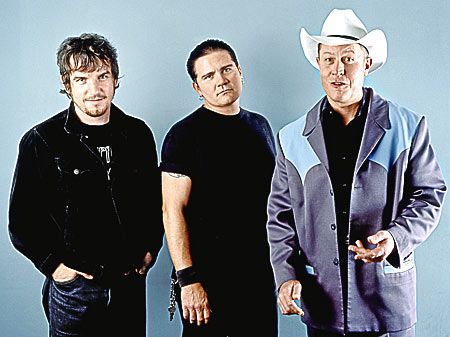
"ORIGNIALITY IS VERY IMPORTANT," said James "the Reverend Horton Heat" Heath. "At the same time, it's important to be accessible. You can be really original, and be playing a chain saw, a harp and a doghouse, and people are like, 'That's really original. Please stop.'"
Read the rest of a short but fun interview HERE
Them Tornados (South Africa) - bone dry and cracklin' neo-rockabilly that sits nicely between the Stray Cats and Tiger Army.
The Idle Americans (Baltimore, MD) - If The Georgia Satellites listened to Stevie Ray Vaughn.
11.03.2008
 Two CD compilations are always compelling, as they normally collapse an entire career into a basketful of tracks… not an exhaustive box set for purists, but not a “best of” with just the road-tested standards. These collections give casual fans a real chance to see how an artist rises above (or knuckles under to) passing fads and hones and develops his or her craft. For Tom Russel, this extended collection, VETERAN'S DAY: THE TOM RUSSELL ANTHOLOGY, shows how he has adorned the basic truth of his art in various ways. Russell is a storyteller, a “cowboy poet”. For those unfamiliar, cowboy poetry is an enduring artform in which the stoic American icon of masculinity is given voice through the work of writers attracted to the Western motif. In film, Clint Eastwood is a cowboy poet. In song, we have talents like Russell.
However, the market isn’t always kind to cowboy poets, so Russell infuses his consistent point-of-view into fresh musical “clothes”. Early tracks betray a 70’s era singer-songwriter sound, almost an “AM Gold” vibe. Later tracks on the first CD have the sound of a solid roots-rock road band -- think Lords of the New Church or The Del Fuegos. By the second CD, Russell’s voice takes on a deeper timbre – and a new prominence – in tracks that blur the line between classic standard-bearers of country, such as Merle Haggard, and alt.country. Russell different tones and textures all serve rather languid narrative songs. There’s not much here that’ll help you shake your ass, but if you have the patience, a number of tracks paint a narrative that will engage your imagination.
10.31.2008

I was trying to find Baron Shiver's KLXU's DJ gig, but couldn't find it podcast anywhere! (what is this -- 2006??) Luckily, I happened on the BURRITO ELECTRICO Halloween podcast, which is a solid, fuzzed-out, pseudo-Misfits-heavy slab o' Horror rock.
play list:
HellCat and the Prowl - Halloween
Graveyard Shift - Coffin Cadillac
Rezurex - Graveyard Girl
The Van Orsdels - Shallow grave
Back to Zero - Demon Girl
The After Darks - RedNeck Zombie
BlitzKid - Making a Monster
Misfits - Night of the Living Dead
The Monster Club - Boris Bella & I
GraveStompers - Halloween in HaddonField
Evil Devil - Highway 666
As DiaBatz - Witches Stomp
Calabrese - Childern of the night
The SpookShow - Carry me Home
The Coffin Caddies - Zombiemania
The Undead - Be My Ghoul
The Flanders - Halloween
Misfits - Halloween II

Happy Halloween!
Remember to vote in our Halloween Pin-up Contest on MySpace!
10.29.2008
Review: Buddy Miller - The Best of the Hightone Years
0 comments Posted by Bettie Blogger at 7:44 PM The bulk of Buddy Miller’s songs, at first blush, seem to consist of romantic ballads offered with tasteful, understated arrangements. On a few cuts, the production seems bent on putting a country radio ballad sheen on singer-songwriter confessionals. One could think that this is a collection designed to have you crying in your Starbucks latte. However, if you lay back and let this group of songs, THE BEST OF THE HIGHTONE YEARS, reflecting his output from 1995-2002, wash over you, a hard-edged poetry emerges, the kind of surprising twists of narrative and unexpected depths earned by a clever turn-of-phrase that elevates this material. Imagine taking the emotive power of Lefty Frizzell and combining it with the low-key intelligence of Leonard Cohen, you’ll likely picture songs that strive to offer something beyond country professionalism.
His wife, Julie Miller, elevates every track on which she appears, dueting with her guitar-slinger husband on four tracks and offering tight harmonies on others.
Standouts include slow burn thumpers like DOES MY RING BURN YOUR FINGER and LITTLE DARLIN’ -- and his take on the hit he wrote for the Dixie Chicks, HOLE IN MY HEAD, smokes their more popular version.
 With unrepentant zeal, Producer/Director Chuck Williams, Producer/Director/Host Daniel Roebuck and Associate Producer/Co-Host Bob Burns delve into the history and fandom of Halloween. While it won’t win any Oscars for cinematography, the documentary has the professional sheen of a television production. But where this DVD blows any “Halloween retrospective” Discovery Channel doc away is in the carefully cultivated content, which manages to be both fannish in its appreciation for monsters and Halloween displays and gratifyingly sociological in examining the origins and motivations for the public’s love of the holiday.
If you’re young enough to think that Rob Zombie invented his persona out of whole cloth or you are someone who simply has a stack of old FAMOUS MONSTERS OF FILMLAND magazines or 70’s Universal Monsters models gathering dust in a closet, you NEED this documentary. It is an education, a celebration and an affirmation for all those who know that SCARY and FUN are not mutually exclusive.
ROBERT ENGLUND and ALICE COOPER add some superstar sizzle, managing to show that the “pros” got that way by being the biggest fans. They’re both in touch with their inner Trick-or-Treater, even after it’s become a “business”.
It’s off the beaten track, however, where the real fun is had… meeting the artisans who lovingly craft vinyl masks, special effects wizards who put just as much effort into their neighborhood haunted house as they do a multi-million dollar production and the fans who are so eager to be at the mad monster party that they build exotic and ornate museums for their collectibles or even devote their lives to building replicas of their favorite creatures.
Hurry on over to http://www.dvdhalloween.com or AMAZON.COM and pick up a copy of HALLOWEEN – THE HAPPY HAUNTING OF AMERICA – the DVD for your inner Monster groupie!
Remember to visit the Blog MySpace page and vote for your favorite Halloween Pin-up! The contest is sponsored by HALLOWEEN - THE HAPPY HAUNTING OF AMERICA.
10.25.2008
A slightly cloying article about the "high end" discovering "lowbrow", courtesy of the LA TIMES. Still, it name-drops Oceanic Arts, Shag and the always fun Tiki Central forum.
Noted Los Angeles uber-kool "designer toy" artist, julie b., has a sale posted on her myspace page. Make her bad luck your good luck and pick up a piece of amazing original art fer cheap!
Note: "mother" is sold.
Interested in buying?
Contact her on her myspace page or email her at juliebossinger@hotmail.com.

Music Review: Dave Alvin - Best of the Hightone Years
0 comments Posted by Bettie Blogger at 4:20 PM Dave Alvin’s THE BEST OF THE HIGHTONE YEARS is the stark, lonesome soundtrack to a desert roadtrip of the mind’s eye. Put it on, and the slide guitars, folk rhythms and nuanced lyrics will have a listener in a classic Cadillac, nursing a broken heart, somewhere between the Inland Empire and the Texas panhandle, staring down a dusty ribbon of empty highway that stretches into the horizon.
What Alvin, an original member of the legendary Blasters, does brilliantly in his solo work is imbue the century-old country blues that obviously inspire him with the dexterous songwriting of a honed craftsman. In track after track, on songs such as “Dry River”, “King of California” and “Fourth of July”, Alvin uses a specific, blue-collar Los Angeles that is never mentioned in US Weekly and a metaphor for loneliness and longshots, giving transitory, sometimes frivolous Los Angeles a touch of pathos and, perhaps, stoic dignity.
Pick up this release if you want to hear what Country radio would sound like if they gave a damn. Dave Alvin expressed a desire to mix “blues, folk, rock and roll, R&B and country”, grow as a musician and not be messed with too much. By the sound of it -- mission accomplished!
THE BEST OF THE HIGHTONE YEARS culls from a decade of Alvin’s output: 1990-2000. It offers a solid overview of albums in this period, as well as some surprises: an amazing unreleased studio various of “Dry River”, an original blues tune, “Dixie Highway Blues” and a few rarities, such as a duet with Katy Moffatt. As with any collection, THE BEST OF THE HIGHTONE YEARS faces the conflicting tasks of appealing to neophytes and purists, both. It speaks to the continuing quality of SHOUT! Factory packages that it succeeds so well. Both “newbies” and longtime fans should wear this one out.
THE BEST OF THE HIGHTONE YEARS hits shelves October 28th.
Buy on Amazon.
10.22.2008
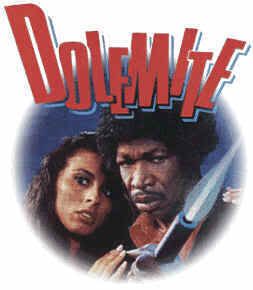
It is with great sadness that we report the passing of one of Norton Records' premier stars, the incredible Rudy Ray Moore-- world famous movie star, recording artist and comedian, known throughout the world as the bad, bad Dolemite. We pass along some in-house memories here, adding to umpteen accumulating accolades.
BILLY REMEMBERS: THE CAT NAMED DOLEMITE
It's so hard to imagine that Rudy Ray Moore is gone. The phrase "larger than life" seems to have been coined just for him. The Dolemite character of his movies and comedy routines became part of his every day persona. I remember one time years ago, when Miriam and I drove over to pick up Rudy at his sister's place in West Orange, New Jersey. When we arrived at the address, I realized we had no apartment number so I went to use the pay phone outside to call him. There were two characters leaning against the phone booth, one drinking out of a paper sack. They gave me some grief about using “their” phone and a little uneasy banter was exchanged until Rudy strolled out the front door, resplendent in a long black coat with white ermine fur trim and a massive matching chapeau. The guy with the beverage's eyes popped out like in the cartoons. “DOLEMITE!" he cried out. “IT'S DOLE-FUCKIN'-MITE!” I would have loved to have been a fly on the wall the next morning when that cat tried to sort out his hangover.
Rudy may well have been the single most respected person I've ever met-- admired and revered by people from all walks of life. Once I was driving Rudy to the airport and he was jockeying two calls on his cell phone. He had a hip hop big shot on one line confirming Rudy's appearance at a Player's Ball, while he had a priest on hold. Rappers in particular all cited Rudy's groundbreaking films and records as an influence. One day while I was hauling records in and out of Coyote Studio basement here in Brooklyn, rap star Nas was shooting a video upstairs on North 6th Street. It was obvious that I was in the way, constantly coming in and out of the front door while they were trying to film. A crew member brought my interference to the attention of Mike Caiati, the owner of Coyote Studios. Mike told them to cut me some slack, that I was a friend of Dolemite. Suddenly everyone was my best pal and I was swapping Dolemite posters for delicious gourmet sandwiches.
Nathaniel Mayer, a major fan of Rudy's, pointed out after having his photo snapped with Rudy, “Where I live, if you show anybody a picture of you with Dolemite, you got gold…”
We had the great pleasure in recording Rudy along with Andre Williams on a cover of the Crawford Brothers' I Ain't Guilty, the pair belting out the duet like none other. Rudy arrived in the company of the immortal Jimmy "Mr. Motion" Lynch. Those guys were a non-stop riot! (Rudy climbing the three flights of stairs to the studio: "Jimmy, ain't they got an elevator?" Jimmy: "Sure, Rudy. You elevate one foot and then you elevate the other.") While in the studio, we asked Rudy if he would record a Public Service Announcement on the topic of his choice. He immediately chose AIDS as his topic, and proceeded to cut an excellent, informative off-the-cuff PSA. He then asked to cut another version with "hard words" for FM, and proceeded with a belligerent, hi-octane anti-AIDS rant that took even his saltiest "party records" one better.
When I told him I was booking him room at the Marriott Hotel when he emceed our Norton Soul Spectacular a couple of years ago, he refused to stay there, accusing me of overspending. “Billy, you're just like Busta Rhymes!” Rudy was total class on that show, bringing to the stage one star after another with the same fiery delivery he brought to the screen in DOLEMITE or PETEY WHEETSTRAW. A bad motherfucker to the end and indeed, much, much larger than life.
MIRIAM REMEMBERS: GENTLEMAN RUDY RAY MOORE
Billy's always goofing on me for calling things "Old School". For me, that means the good stuff, better ways, the real deal-- as defined by Rudy Ray Moore! The man defined the limits of taste, humor, and style and left everyone around him agog with his regal personality. And you know, he wasn't pompous-- he just naturally oozed total class. Just gliding through a door, you knew with Rudy that you were in the presence of a true V.I.P. And when he spoke, in that astonishing baritone, he could make a simple sentence an awesome, lyrical pronouncement.
We first met Rudy many years ago at a comedy show. The Great Gaylord called and told us Rudy was going to be doing a show in Jersey City with Wild Man Steve. None of us really knew what to expect-- we loved the Dolemite movies and were crazy about his old 45s, but we didn't know how approachable he'd be with a bunch of goofy greenhorn fans. We needn't have worried. Rudy strode in from the shadows after Wild Man, a tall, insanely handsome man with a dazzling smile, and immediately the audience erupted into enthusiastic screams and applause, particularly from the women! From a ladies point of view, let me assure you girls (and Rudy had a delectable way of says "GIRLS" that could make a 90 year old blush and giggle) that when he started cat calling the big bottom dolls, baiting them with what might be considered insults to the uninitiated, it became obvious that this was a man whose craft was making everybody feel like part of the show. Even when he engaged various ethnic, overly-proportional, overtly interesting, and well, plug ugly, people, it was like a hazing into a esteemed club. Getting called out by Rudy was a badge of honor, a matter of pride. Rudy wrapped up the show by personally presenting the ladies in the audience with battery-operated, light-up, scented roses while reciting his Legend of Dolemite, which is as close to the Rime of The Ancient Mariner as rockin' folk care to teeter. We all jumped up for a standing ovation that went all for some time, and afterwards, we all bought Dolemite back scratchers and got autographs and pictures with the man.
It was obvious that Rudy wanted to reach everyone the world over with his talents. He was not content with being a Black icon in film, or heralded as the first Rapper. It was back at an early WFMU record show in a church basement in the East Village, that Billy and I started speaking with Rudy about his early musical days. He was somewhat shocked that anyone thought there was interest in his early R&B recordings. He was instantly on it, digging for scrapbooks, tapes, and any ephemera to help us document his early pre-comedy career. We started seriously pulling together old recordings, and began interviewing Rudy for biographical notes. Rudy told the stories with great relish. We had the tape recorder going in the car during a snow storm while Rudy was belting out Rally In The Valley and remembering the amateur shows in Cleveland, St Louis, New York, Los Angeles--- every city where there was a venue and audience for Black entertainers. Another time we were eating dinner with him at a hotel restaurant, again over a tape recorder, when Rudy pulled out one of his impromptu, gemaceous nonsequiturs. An airline pilot, evidenced as so by the uniform and hat, was eating alone at another table. Quite suddenly, Rudy called out to him, "Excuse me, young man!" and the pilot looks around and says, "Me?" "Are you flying to Dayton, Ohio this evening?" he asked with great pomp and circumstance, with an elegant English accent. Puzzled, the pilot shook his head, no. Rudy went back into his story with us, without missing a beat. Trust me, it was one of funniest moments, ever. Totally out of the blue, unexplained and OLD SCHOOL. Well, the R&B collection ended up as a double LP set called HULLY GULLY FEVER, the first collection of his early records, and the first thorough telling of his early days from the R&B chitlin circuit to his first moments in standup comedy. He said it reminded him of how much he loved to sing, and he took to including some musical numbers amongst his comedy routines.
The world will remember Rudy as an entertainment genius, as a man with great vision and daring, as a man who would continue working his craft until the end of his life. He will also be remembered as the last of the true gentlemen, a veritable Human Tornado whose work will never be forgotten and whose spirit will forever affect and inspire anyone who follows their heart, no matter what. We love you and miss you, Mr. Rudy Ray Moore.
http://www.nytimes.com/2008/10/22/movies/22moore.html
http://www.latimes.com/news/obituaries/la-me-moore21-2008oct21,0,5052090.story?track=rss
http://www.mtv.com/movies/news/articles/1597502/story.jhtml
http://www.shockingimages.com/dolemite/main.php

10.21.2008

With rockabilly, the Stray Cats wrote great songs. Most bands just had that "1,4,5 Go Cat Go". They didn't break out of that. - Brian Setzer
This article's a few months old at this point, but its always great when musicians interview other musicians. Here, you have THE LIVING END's Chris Cheney interviewing his childhood hero, Brian Setzer about the end of the STRAY CATS and his next moves.
One of the most interesting bits is a discussion about how to be true to rockabilly, but not a slave to it. To a certain extent, the entire scene is about "authenticity", but using the past as a springboard for self-expression is just as important. The Living End left rockabilly behind a long time ago. Their early EPs rate as some of the best 90's era rockabilly, approaching REVEREND HORTON HEAT in energy. As they matured, they seemed to reach for 80's UK power pop influences and the rock/punk melange of the Clash. Now, you can barely hear the rockabilly in their increasingly complex sound.
Setzer crumbing on people's desire "to make it sound like it was done in 1955" is rich, considering the Stray Cats have always relied heavily on covers with similar arrangements to the originals and Setzer produced two albums consisting entirely of covers (STRAY CATS ORIGINAL COOL and solo effort, ROCKABILLY RIOT: A TRIBUTE TO SUN RECORDS - both are great!) Still, it's worth thinking about: is retro lifestyle really liberating our imaginations or is it a crutch... a uniform... that allows us to lazily avoid originality while still donning the cloak of "alternative" and "outlaw"?
Thoughts?
1. Johnny Ace, "Pledging My Love." Romantic, haunting, creepy. This ballad from the tragic R&B star (he died in a Russian Roulette accident in 1954) has been used in many a movie, including Abel Ferrarra's "Bad Lieutenant."2. Rufus Thomas, "Memphis Train." The clown prince of Memphis soul recorded for Sun Records and more famously, Stax Records. This raging R&B ode to love and trains is hard to beat.
3. Charlie Feathers, "That Certain Female." Why Mr. Feathers is only appreciated by a cadre of die-hard roots music enthusiasts and rockabilly nuts is beyond me. Check out the LPs available from Norton Records.
4. Billy Lee Riley, "My Gal is Red Hot." With a raw, gravely voice and a manic stage presence, Riley cut his best material for Sun Records, both as a front man and as a session musician. This song, covered by many a retro rockabilly, is one of his finest offerings.
5. Booker T. and the M.G.s, "Green Onions." Recorded at Stax Records, otherwise known as Soulsville, U.S.A., this is one of the best brooding, strutting instrumentals of the '60s from one of the South's first interracial music acts.
6. The Prisonaires, "Just Walkin' in the Rain." Just one of the many great groups obscured by Elvis Presley's tenure at Sun Records, the Prisonaires were actual Tennessee state prisoners that the warden allowed out -- accompainied by armed gurads -- to record at Sam Philips' burgeoning R&B studio. The 45 went on to sell over 250,000 copies.
7. Bill Justis, "Raunchy." Another killer instrumental from Sun Studios, this catchy and kooky number features the warbly-yet-wonderful sax work of Justis himself, who took over blowin' duties when the session player assigned the instrument failed to show up to the recording date.
8. Jerry Lee Lewis, "Whole Lotta Shakin.'" His personal foibles have been the subject of movies, documentaries and books, but the important thing to remember is that the Killer recorded some of the most energetic, foot-stomping songs of the '50s. This is just one of them.
9. Sam and Dave, "When Something is Wrong With My Baby." They may be best remembered for "Soul Man," but this hot buttered ballad, penned by Isaac Hayes and his Stax writing partner, David Porter, is a beautiful, juicy slice of classic '60s soul.
10. Carl Mann, "Mona Lisa." A love song penned around the famous portrait, this is yet another sadly underappreciated Sun Record, featuring smart lyrics, precise playing and a bouncy energy that can't be denied.
10.19.2008

10.18.2008

Frankie, Drac and Wolfie are partying down in the DVD player! Sort of the "goth Archies", this Filmation cartoon is available from Ink and Paint, in its entirety - 16 "groovy" episodes of catchy, goofy tunes and monster-themed "Laugh-In" style joke fests that will have you grinning even as you're groaning!
Anyone else remember Groovie Goolies?
10.15.2008
Carlene Carter sings the song her mamma, June, wrote and her step-daddy, Johnny, made famous (thanks to a dream in which he heard "Mexican trumpets" and, upon waking, told his producer, Jack Clement, to work up an arrangement).
Listen to Carlene Carter On Mountain Stage, courtesy of NPR.
Set List:
"The Bitter End"
"Bring Love"
"Me and the Wildwood Rose"
"Ring of Fire"
"Stronger"
Buttressing "Ring of Fire" are new originals from Carlene's fresh record. The album reflects the "quadruple loss" Carlene recently weathered... In February 2003, Carlene's long-time partner Howie Epstein died. In May of that same year she lost her mother, June Carter Cash. Stepfather Johnny Cash died that September. Her little sister Rosey passed away in October.
Stronger [is] album that explores the power of love to hurt, to bring laughter, to change the heart and, most of all, to heal. "Just bring love, that's all you're gonna need," a redeemed Carlene sings in [key track] "Bring Love."


10.14.2008

Deke Dickerson is one of the finest and most highly regarded guitarists on the rockabilly circuit. Too bad he's not a straight-up rockabilly guitarist. His songs and his guitar leads, thrilling and full of joy, ebb and flow though surf rock, country, western swing, rhythm and blues, garage rock and yes, rockabilly. The result is something acutely American, technically dazzling and truckloads of fun to listen to and watch.
READ THE REST of this fine article about one of the standard-bearers of the scene, DEKE DICKERSON.
Rockabilly 101: WHOLE LOTTA SHAKIN' radio documentary
0 comments Posted by Bettie Blogger at 3:26 PM
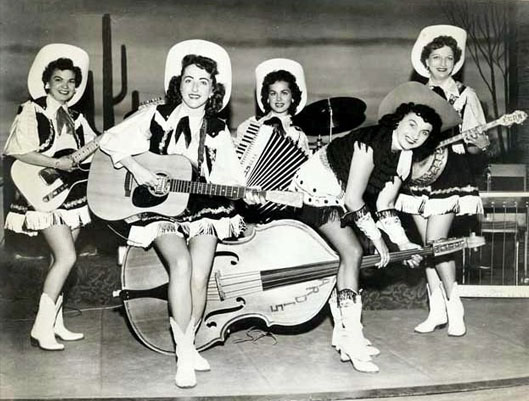
Hosted by the irrepressible Rosie Flores, WHOLE LOTTA SHAKIN' offers, for free, a 10 part streaming radio show that covers all of the basics of Rockabilly. Segments are as follows (make sure to click on "listen now!" at the top to hear the programs):
1. Good Rockin' Tonight: Elvis, Carl Perkins and the rise of Sun Records
2. Get Rhythm: The story of Johnny Cash and The Tennessee Two
3. Fujiyama Mamas: The women of rockabilly stake their claim
4. Rebels with Guitars: Borrowing from Brando: the music's most notorious rebels
5. The Cradle of the Stars: The rise and fall of radio's The Louisiana Hayride
6. Real Wild Child: The story of Jerry Lee Lewis
7. Shake This Shack: Cat Music from the Lone Star State: rockabilly in Texas
8. Rockin' Bones: Suzy Q and rockabilly's one hit wonders
9. Rave On: The life and music of Buddy Holly
10. Summertime Blues: Sunglasses after dark, rockabilly California-style
There isn't a Rockabilly compelation this complete on the market for ANY price... and here, you get to hear an illustrative cross-section of the genre for nuthin'!
10.09.2008
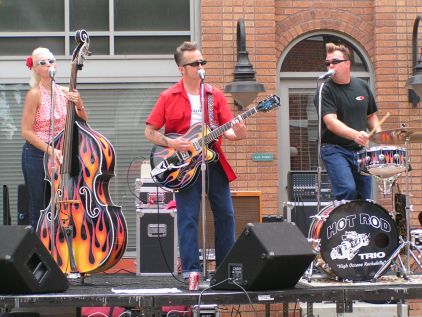
OC WEEKLY just interviewed a very deserving Rockabilly band. I don't know how popular they are in other parts of the country, but they've long proved themselves to be talented and authentic stalwarts of live Rockabilly.
Check 'em out:
OC WEEKLY interview
MYSPACE
Hot Rod Trio
Ditch the dime store wigs and pick yourself up an Official "Bettie by Olivia" Halloween Costume by those geniuses at Pinup Girl Clothing!
Each item is OFFICIALLY LICENSED AND APPROVED by BETTIE PAGE AND OLIVIA!
Choose from Sexy Cat Girl, Sexy Devil Girl, Sexy Bronco Buster Cowgirl, Substitute Teacher or Sexy Nurse Bettie. Each costume comes with an insert featuring a reproduction of the original Olivia pinup that inspired the costume!


10.08.2008
This is what YOUR space age bachelor pad should look like! If you've ever seen Brian DePalma's BODY DOUBLE, you saw the definition of LA retro-future swank livin' -- even if living in uneasy proximity to a drill killer wasn't disclosed in the lease.
An encounter with the deliciously deadly legs of "Bambi" and "Thumper" may have left Sean Connery's James Bond shaken, the cool-as-a-cucumber interiors of their coctail-hour crash pad may have left him stirred.
What most don't know is that these two dwellings that defined the "party under the mushroom cloud" lifestyle of atomic-aged sophistication were the work of Frank Lloyd Wright protegee (and, in turn, inspiration to Frank Gehry) JOHN LAUTNER. The Hammer Museum at UCLA has an appreciation of his work (including designs and scale models), placing his outrageous and ever-evolving architectural style in proper (and respectful) context.
Maybe you can't transform your duplex into a spaceship of glass and steel perched elegantly on a Hollywood Hills cliffside, but looking into Lautner's philosophy of egalitarian elegance that emphasizes free-flowing, open spaces may inspire the canny cat or kitten to modernize his or her space!
More:
Hammer Museum Exhibit
John Lautner Homepage
NY Times SLIDESHOW
NY Times article
arcspace article
SHOPPIN'
More fun with LA architecture:
9.02.2008
As has been widely reported, Jerry Reed has passed at age 71 after fighting emphysema. Most others are concentrating on his pop-culture high-water mark, his portrayal of "Snowman" in the SMOKEY AND THE BANDIT series.
What most are missing is that, underneath his "good ol' boy" image, Jerry Reed was a country SHREDDER, who's intense fingerstyle fretwork was rivaled only by Chet Atkins, himself!
From THE TENNESSEEAN:“If (Merle) Travis’ thumb and index finger picking style was first generation, and Chet Atkins’ use of thumb, index and middle finger was second, Reed’s use of his entire right hand to pick (the famous “claw” style) was the wild, untamed and dauntingly complex third generation,” wrote historian and journalist Rich Kienzle.
Mr. Reed switched from a steel-stringed acoustic guitar to a nylon-stringed Baldwin model, with an electronic “pickup” that allowed the guitar to be heard above a full band. He signed a Columbia Records contract in 1961, but that deal yielded no hits. His songwriting and session playing proved more lucrative, as he performed on hits for Bobby Bare and he penned Porter Wagoner’s 1962 No. 1 hit, “Misery Loves Company.” And Mr. Reed attracted a high-powered fan in Chet Atkins, the guitar star who ran Nashville’s branch of RCA.
Need more proof of cool?
No less than GENE VINCENT became the first major artist to cut one of Reed's compositions, "Crazy Legs", in 1958.
ELVIS PRESLEY, who, along with MERLE TRAVIS and RAY CHARLES, inspired Reed, collaborated with the guitarist on four compositions. Unfortunately, in keeping with the Colonel's "cut his nose to spite his face" style of management, the amazing session was interrupted, in favor of an attempt to strong-arm Jerry Reed out of his publishing royalties on Reed's songs, despite the fact that Elvis was merely trying to "cover" Reed's previous released originals.
Reed details it, with some charity, in a recent interview, although the second volume of Peter Guralnick's Elvis bio, CARELESS LOVE, has it in more detail.He had just been fishing, he recounted, the first and only time he met Elvis Presley. That was in 1967. Presley had come to Nashville to record, and one of the songs he was working on was "Guitar Man," which Reed had written and recorded. "I was out on the Cumberland River fishing," he recalled, "and I got a call from Felton Jarvis (then Presley's producer). He said, 'Elvis is down here. We've been trying to cut 'Guitar Man' all day long. He wants it to sound like it sounded on your album.' I finally told him, I said, 'Well, if you want it to sound like that, you're going have to get Reed in there to play guitar, because these guys (you're using in the studio) are straight pickers. He picks with his fingers and he tunes that guitar up all weird kind of ways.'" So Jarvis hired Reed to play on the session.
Reed and Elvis cut rollicking versions of "What'd I Say?" and "Big Boss Man" before "Reed was hit up for the publishing rights to his song. He refused, and left; and so did the spirit of the session." These four songs, two of them only available on the Elvis box set released in the 1990s, rank among Elvis' best post-Sun work. Imagine an album or two of these gems?
"I hit that intro," Reed said, "and boy, [Elvis's] face lit up and here we went. Then after he got through that, he cut [my] 'U.S. Male' at the same session. I was toppin' cotton, son." There's an outtake from that session that still circulates on Music Row in which you can hear the King and the Alabama Wild Man (one of Georgia-born Reed's nicknames) joking with each other. (link)
Although that was not to be, Elvis later covered Reed's compositions "Talk About the Good Times" and "A Thing Called Love". Reed was proud that the song, never a hit, became a standard. "(Johnny) Cash cut it. (Glen) Campbell cut it. Elvis cut it. I cut it."
In the 90's Reed joined a "supergroup", consisting of Waylon Jennings, Mel Tillis, and Bobby Bare.
If you want to peruse his discography or filmography, hop over to Wikipedia.
8.27.2008
Follow the link to a FANTASY MAGAZINE article about the portrayal of women in comics, then come back here and let us know what you think! To paraphrase SPINAL TAP, there's a fine line between "sexy" and "sexist". Certainly, comics are a haven for pin-up art... but also for insulting stereotypes. Check out the article to dig deeper!

Hat Tip to Rick Klaw!
Rick Klaw is the author of Geek Confidential: Echoes from the 21st Century
NOW AVAILABLE from MonkeyBrain, Inc.
To be alerted about all things Klaw, join the Geek Confidential mailing list.
Read more Rick Klaw at the Dark Forces Book Group blog and SF site.


